
Browser map creation
Open the editor in a desktop browser, start from a blank map or demo, and keep the source project available for later edits.
Build encounter maps in a modern desktop browser, save editable projects online, and export PNG files for your table or VTT.
Editor access requires an account and a paid plan: the Online subscription or the €14.99 one-time Offline Edition. Compare plans.
A browser-based RPG map editor is useful when you want to skip native installs and keep the prep loop online: open a demo, create a battle map, save the source, export an image, and align the result inside your VTT.
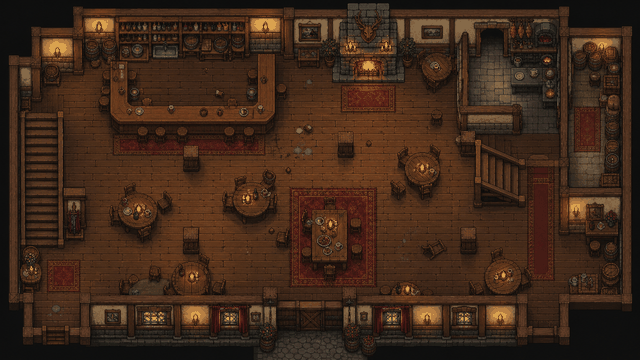
Browser prep is about speed, portability, and fewer setup chores. It is strongest when the map needs to be created, saved, changed, and exported quickly.
Open the editor in a desktop browser, start from a blank map or demo, and keep the source project available for later edits.
Block walkable space first, then add props, doors, cover, water, roads, dungeon rooms, and other details that affect play.
Plan around readable squares, token movement, line of sight, and encounter pacing instead of decorative detail alone.
Export a flat image for VTT upload, table handouts, projector play, or campaign notes; configure VTT automation inside the platform.
Open a demo, check the grid, then decide whether the editor fits your table prep loop.
Build rooms, roads, caves, taverns, ruins, ambush sites, and boss arenas with a clear five-foot grid.
Save editable maps to your account and revise them when the party takes a different route.
Export PNG scene art for Roll20, Foundry VTT, or another virtual tabletop, then align the platform grid.
Use the browser editor when you want a lighter prep loop than a desktop cartography suite.
Use the browser editor when the shipped workflow matches your campaign prep. Use desktop tools when offline or heavyweight export features matter more.
| Decision factor | RPG Map Editor | Other workflow |
|---|---|---|
| Primary job | Encounter-scale DnD, RPG, dungeon, and battle maps | Often broader illustration, worldbuilding, AI generation, or VTT automation |
| Workflow | Browser editor, account saves, terrain/stamps, grid checks, PNG export | Varies by product; may require desktop install, subscription library, or manual image editing |
| VTT handoff | Flat PNG export; walls, lights, fog, and tokens stay in the VTT | Some tools offer richer VTT packages; verify current support before switching |
The useful test is a map you would actually run: build it, export it, and align it in your VTT.
Open RPGMapEditor, choose a blank canvas or demo, paint broad terrain first, add props that clarify cover and movement, keep the tactical grid visible, save the editable project, then export a PNG for Roll20, Foundry VTT, print, or sharing. Walls, lights, doors, tokens, and platform automation are configured inside the VTT after import.
Build one encounter-scale map, export it, and validate the grid in the platform you actually use.
Use this page when that phrase matches your next map-making task or comparison step.
Use this page when that phrase matches your next map-making task or comparison step.
Use this page when that phrase matches your next map-making task or comparison step.
Use this page when that phrase matches your next map-making task or comparison step.
Use this page when that phrase matches your next map-making task or comparison step.
Use this page when that phrase matches your next map-making task or comparison step.
The map editor opens in a desktop web browser with WebGL support. You can create maps, save projects to your account, and export PNG images without installing a separate desktop editor.
Yes for image-based workflows. Export a PNG, upload it to your VTT, and align that platform's grid to the exported artwork. VTT-specific walls, lighting, and tokens are configured inside the VTT.
It depends on your workflow. Browser editing is convenient for fast prep and account-backed saves. Desktop apps may still be stronger for huge offline projects, local asset libraries, or advanced VTT package exports.
Paid subscribers can save source maps. See pricing for current plans and features.
Open a real map, change it, export it, and decide from the result.